
Abstract
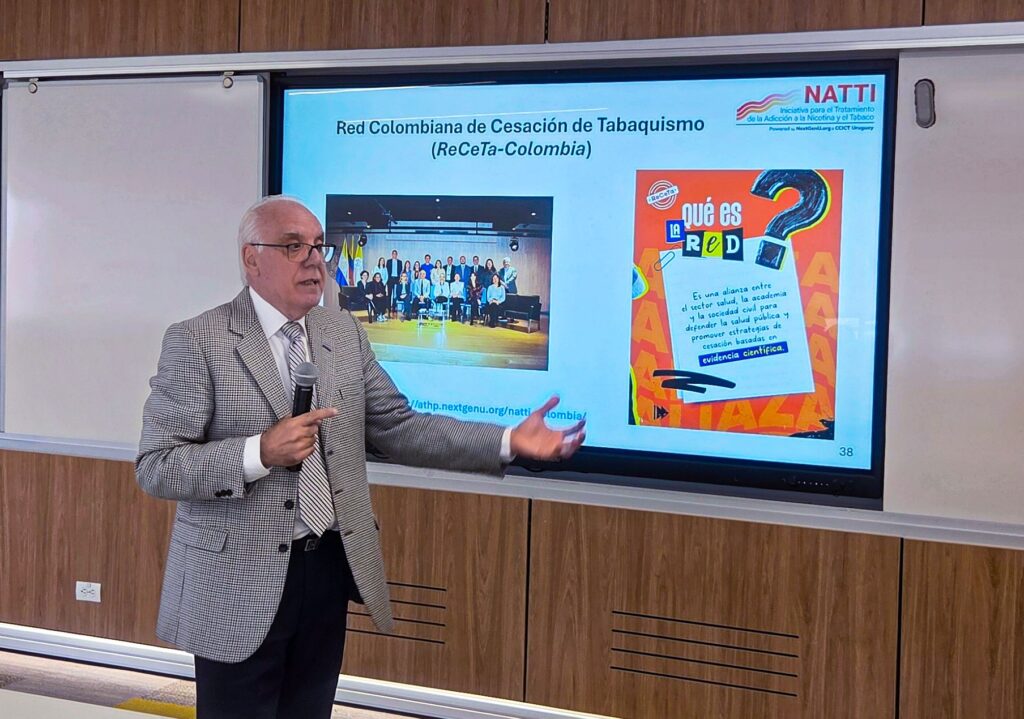
The Colombian Tobacco and Nicotine Cessation Network (ReCeTa Colombia) is an innovative initiative aimed at strengthening the capacity of Colombia’s health system to prevent and treat tobacco and nicotine dependence through collaboration among scientific societies, universities, professional organizations, healthcare institutions, and health authorities.
Beyond serving as a national network, ReCeTa is the pilot project of the international Nicotine Addiction and Tobacco Use Treatment Initiative (NATTI), which seeks to develop a replicable strategy for establishing national cessation networks in Latin America and other regions of the world.
Its objective is to help close one of the most significant gaps in tobacco control: the limited availability of accessible, integrated, and sustainable cessation services. This article examines the potential public health impact of ReCeTa Colombia, its role within NATTI’s global strategy, and its relevance as a model for strengthening the participation of health professional associations and academic institutions in the treatment of tobacco and nicotine dependence.
Introduction
Over the past two decades, Colombia has made significant progress in implementing the World Health Organization Framework Convention on Tobacco Control (WHO FCTC), particularly through legislation on smoke-free environments, health warnings, advertising restrictions, and increased tobacco taxation.
However, as is the case in most middle-income countries, a substantial gap remains between tobacco control policies and the availability of effective services to help people quit using tobacco and nicotine products.
The WHO estimates that more than 60% of people who use tobacco want to quit and that approximately 40% make a quit attempt each year. However, only a very small proportion successfully achieve and maintain abstinence. Although evidence-based treatments can significantly increase the likelihood of successful cessation, very few people receive them.
This situation has become even more complex with the emergence and expansion of electronic cigarettes, heated tobacco products, nicotine pouches, and other devices that sustain nicotine dependence and create new clinical and regulatory challenges.
ReCeTa Colombia was established in this context as a national platform to coordinate efforts, strengthen capacities, and promote the systematic implementation of cessation interventions.
What Is ReCeTa Colombia?
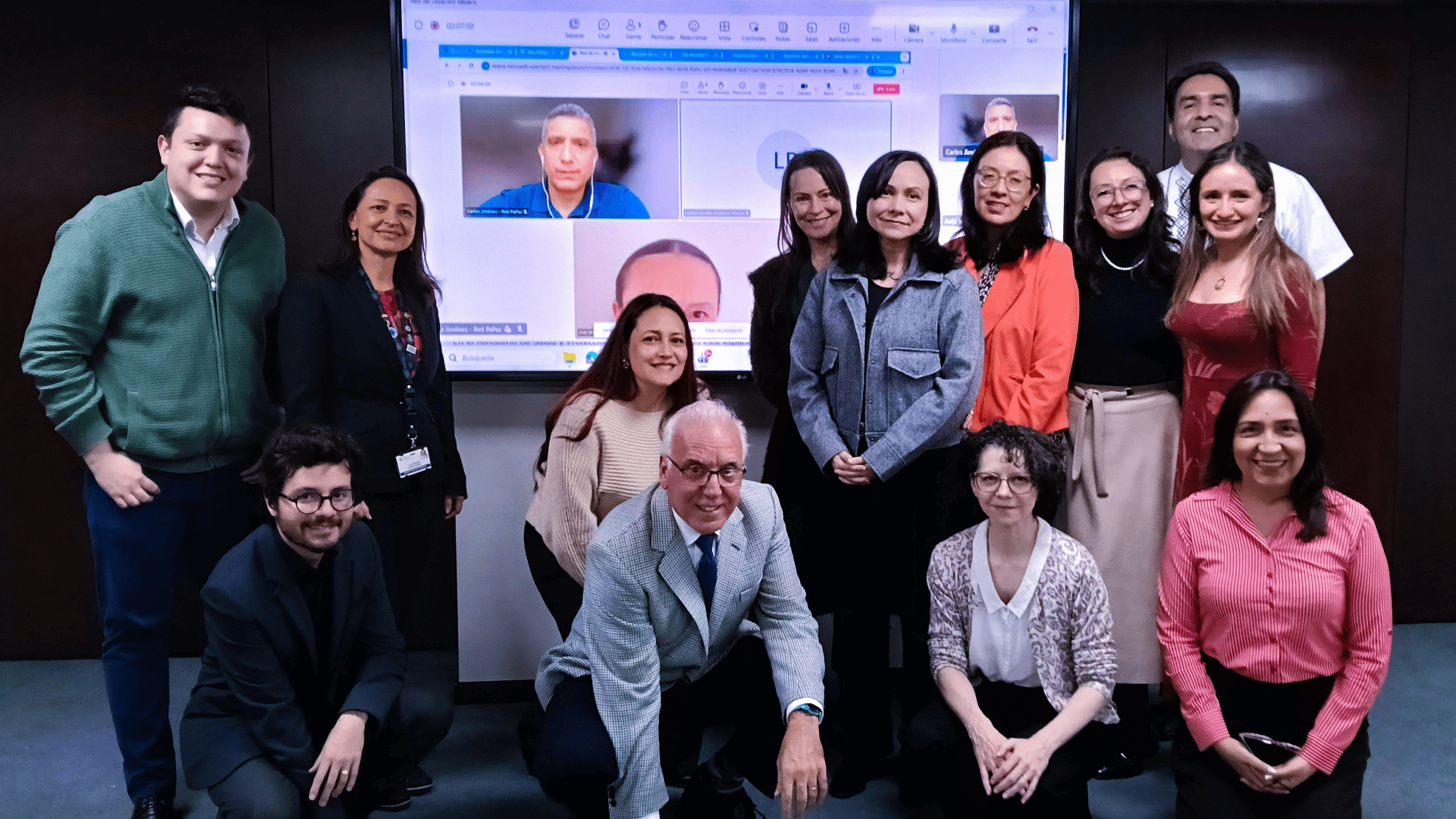
ReCeTa Colombia, the Colombian Tobacco and Nicotine Cessation Network, is a collaborative network composed of:
- scientific societies;
- health professional associations;
- faculties and schools of health sciences;
- hospitals and healthcare centers;
- researchers;
- public health organizations;
- civil society organizations
with support from the Colombian Ministry of Health and Social Protection.
Its purpose is to create a permanent community of practice capable of:
- promoting continuing education;
- facilitating scientific exchange;
- developing research;
- advancing public policies;
- supporting the implementation of treatment services for tobacco and nicotine dependence;
- countering the harm-reduction narrative promoted by the tobacco and nicotine industries;
- informing and warning the public about the health threats posed by new tobacco and nicotine products, particularly among young people.
Rather than being an independent organization, ReCeTa is a collaborative platform that facilitates coordination among multiple national stakeholders.
ReCeTa was established through the leadership of NATTI, with support from a six-month grant provided by Vital Strategies, and was officially launched on February 17, 2026.

An Innovation in Tobacco Control
Traditionally, many tobacco control strategies have focused on population-level regulatory measures, including:
- taxation;
- smoke-free environments;
- advertising bans;
- packaging regulations;
- health warnings.
These policies have demonstrated substantial effectiveness.
However, strengthening cessation services has received less attention in many countries, despite being one of the central components of Article 14 of the WHO FCTC.
NATTI, ReCeTa Colombia, and future national ReCeTa networks aim to reduce this gap.
Their innovative approach consists of shifting responsibility for cessation away from isolated programmes and toward a permanent multisectoral network in which different institutions collaborate to increase national capacity.
NATTI’s Pilot Project
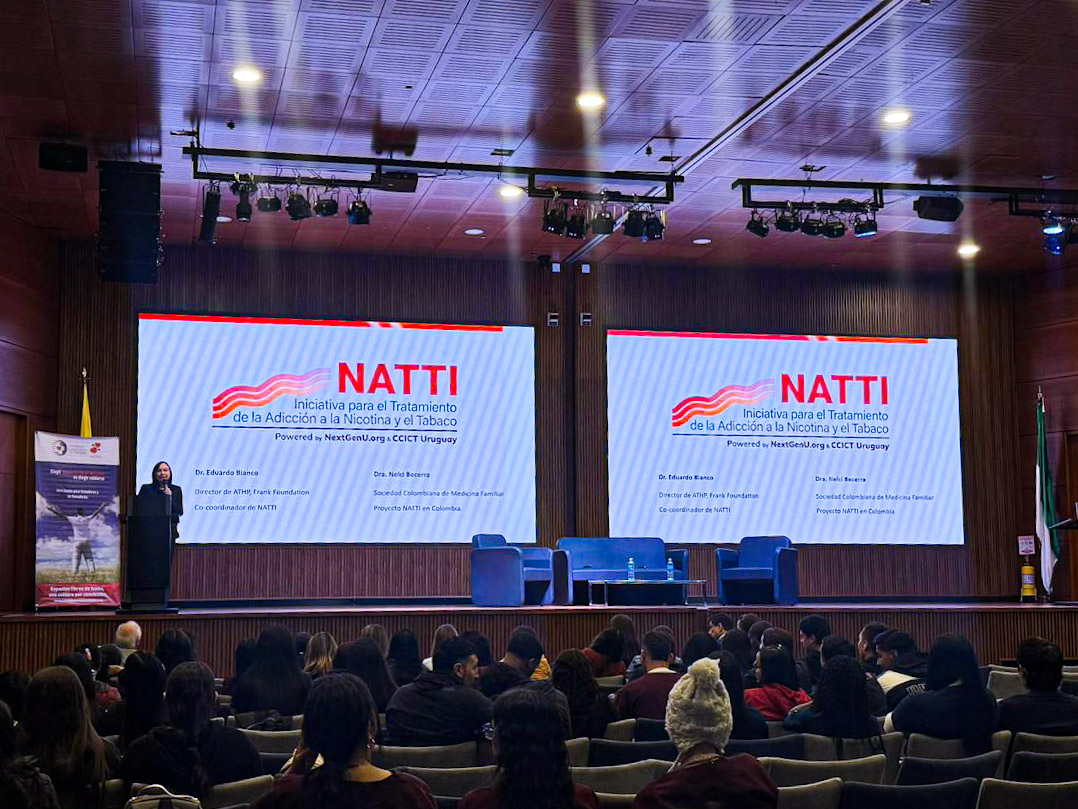
The Nicotine Addiction and Tobacco Use Treatment Initiative (NATTI) developed the concept of Cessation Networks, known as ReCeTa networks, as an international strategy to strengthen the implementation of Article 14 of the Framework Convention on Tobacco Control.
Within this strategy, ReCeTa Colombia is the first pilot project.
Its objective is to evaluate an organizational model that can subsequently be adapted for use in:
- other Latin American countries;
- Africa;
- Asia;
- Eastern Europe;
- the Middle East.
Rather than exporting a specific programme, NATTI proposes a flexible collaborative governance model that can be adapted to the institutional characteristics of each country.
A New Approach to Engaging Professional Associations
One of NATTI’s most innovative features is its recognition that health professional associations represent a valuable but underused resource for expanding access to tobacco-dependence treatment.
Physicians, dentists, nurses, pharmacists, psychologists, physiotherapists, and other professionals interact daily with millions of patients, many of whom have health conditions caused or worsened by the use of tobacco and nicotine products.
However, in many countries, health professionals:
- receive little or no training in cessation;
- lack standardized protocols;
- have limited access to continuing education opportunities;
- participate only minimally in national policymaking.
NATTI and ReCeTa seek to reverse this situation by encouraging scientific and professional associations to take an active role in:
- professional education;
- the development of clinical guidelines;
- course development;
- competency certification;
- research;
- policy advocacy.
The Role of Academia
Universities, particularly faculties and schools of health sciences, represent another central component of the model.
The systematic incorporation of content on nicotine dependence and tobacco-use treatment into medical, dental, nursing, psychology, and pharmacy curricula represents a highly cost-effective strategy.
ReCeTa will promote and facilitate:
- collaboration among universities;
- faculty exchange;
- the development of joint courses;
- multicenter research;
- the training of future leaders.
In this way, the network will contribute to building sustainable institutional capacity.
Potential Contribution to Colombia
ReCeTa’s potential impact may be seen at several levels.
1. Increased Professional Training
Thousands of professionals could receive standardized training based on the 2024 WHO Clinical Treatment Guideline for Tobacco Cessation in Adults.
2. Improved Integration of Services
ReCeTa will promote coordination among primary healthcare services, hospitals, specialized clinics, and community programmes.
3. Greater Public Access
The network will promote and support expanded access to effective cessation interventions, including:
- brief advice;
- behavioural interventions;
- pharmacotherapy;
- follow-up support.
4. Research
National collaboration could increase Colombian scientific research on nicotine dependence. Health sciences students could also incorporate tobacco and nicotine cessation into their dissertations, research projects, and theses.
5. Policy Advocacy
Recommendations issued collectively by multiple scientific societies carry greater legitimacy when presented to health authorities.

A Replicable Model for Latin America
Many Latin American countries face similar challenges, including:
- failure to incorporate brief cessation advice into primary healthcare;
- a very limited number of specialists available to assist people with more complex needs;
- the absence of national cessation networks;
- limited university-level training;
- low treatment coverage;
- insufficient institutional coordination.
The Colombian experience will make it possible to develop and evaluate replicable tools, including:
- bylaws;
- organizational structures;
- educational programmes;
- protocols;
- indicators;
- evaluation systems;
- governance models.
This could significantly reduce the time required to establish similar networks in other countries.
Potential for Other Regions of the World
Although initially designed for Latin America, the strategy has universal characteristics.
The model can be adapted to other regions, and NATTI expects to expand it to:
- Africa;
- Southeast Asia;
- Eastern Europe;
- the Eastern Mediterranean.
Many countries in these regions face similar needs, including:
- limited clinical capacity;
- the growing marketing of new nicotine products;
- insufficient implementation of Article 14.
ReCeTa networks could become regional platforms for sharing experiences, educational resources, and training activities.
ReCeTa and the Response to the Epidemic of New Nicotine Products
The rapid expansion of electronic cigarettes, heated tobacco products, nicotine pouches, and synthetic nicotine requires coordinated responses.
ReCeTa can play a fundamental role through:
- the dissemination of independent scientific evidence;
- training on nicotine dependence;
- continuous clinical education;
- monitoring of industry-interference strategies;
- the promotion of messages that are consistent with the WHO FCTC.
In this regard, the network strengthens national capacity to respond to a rapidly changing nicotine market.
NATTI: An Innovative Capacity-Building Strategy
NATTI proposes an important conceptual shift.
Traditionally, many international initiatives have consisted of isolated courses or temporary projects.
In contrast, NATTI seeks to build permanent national ecosystems in which:
- professional associations;
- academic institutions;
- healthcare institutions;
- civil society organizations;
- health authorities
work together in a coordinated manner to improve the treatment of tobacco and nicotine dependence.
ReCeTa networks are the primary organizational mechanism for putting this vision into practice.
Their success will not be measured solely by the number of professionals trained, but also by their capacity to generate sustainable collaboration, national leadership, scientific production, and the effective implementation of cessation services.

Conclusions
ReCeTa Colombia is a pioneering initiative that has the potential to transform the way tobacco and nicotine cessation is organized in the country. By bringing together scientific societies, universities, health professionals, healthcare institutions, and health authorities, the network strengthens the implementation of Article 14 of the WHO Framework Convention on Tobacco Control and expands national capacity to provide evidence-based treatment.
As NATTI’s pilot project, ReCeTa Colombia also has strategic international value. Its experience will contribute to the development of a replicable model for Latin America and other regions, demonstrating that collaborative networks can serve as an effective mechanism for strengthening professional education, promoting research, improving access to treatment, and increasing the participation of academic institutions and health professional associations in tobacco and nicotine cessation.
In a context characterized by the increasing marketing of new nicotine products and the continued interference of the tobacco industry, initiatives such as ReCeTa offer an innovative and sustainable response centered on public health, interinstitutional cooperation, and the development of national capacities.
Should it successfully consolidate its structure and document its outcomes, ReCeTa Colombia could become an international reference for the implementation of national cessation networks and make a significant contribution to reducing the global burden of disease caused by nicotine addiction and tobacco use.
References
- World Health Organization. WHO Framework Convention on Tobacco Control. Geneva: WHO; 2003.
- World Health Organization. Guidelines for Implementation of Article 14 of the WHO Framework Convention on Tobacco Control: Demand Reduction Measures Concerning Tobacco Dependence and Cessation. Geneva: WHO; 2010.
- World Health Organization. WHO Clinical Treatment Guideline for Tobacco Cessation in Adults. Geneva: WHO; 2024.
- World Health Organization. WHO Report on the Global Tobacco Epidemic 2025. Geneva: WHO; 2025.
- World Health Organization. Toolkit for Delivering the 5A’s and Brief Tobacco Interventions in Primary Care. Geneva: WHO; 2014.
- Pan American Health Organization. Report on Tobacco Control for the Region of the Americas. Washington, DC: PAHO.
- Fiore MC, Jaén CR, Baker TB, et al. Treating Tobacco Use and Dependence: 2008 Update. U.S. Public Health Service.
- World Bank. Curbing the Epidemic: Governments and the Economics of Tobacco Control. Washington, DC: World Bank.
- Framework Convention Alliance. Advancing Implementation of WHO FCTC Article 14: Policy Resources.
- Bianco E, Zabert G, Mejía P, et al. Conceptual Framework of the Nicotine Addiction and Tobacco Use Treatment Initiative (NATTI) and the ReCeTa Model for Strengthening Tobacco Cessation Networks. NATTI conceptual document, in preparation.